Was Aladdin based on a real person?
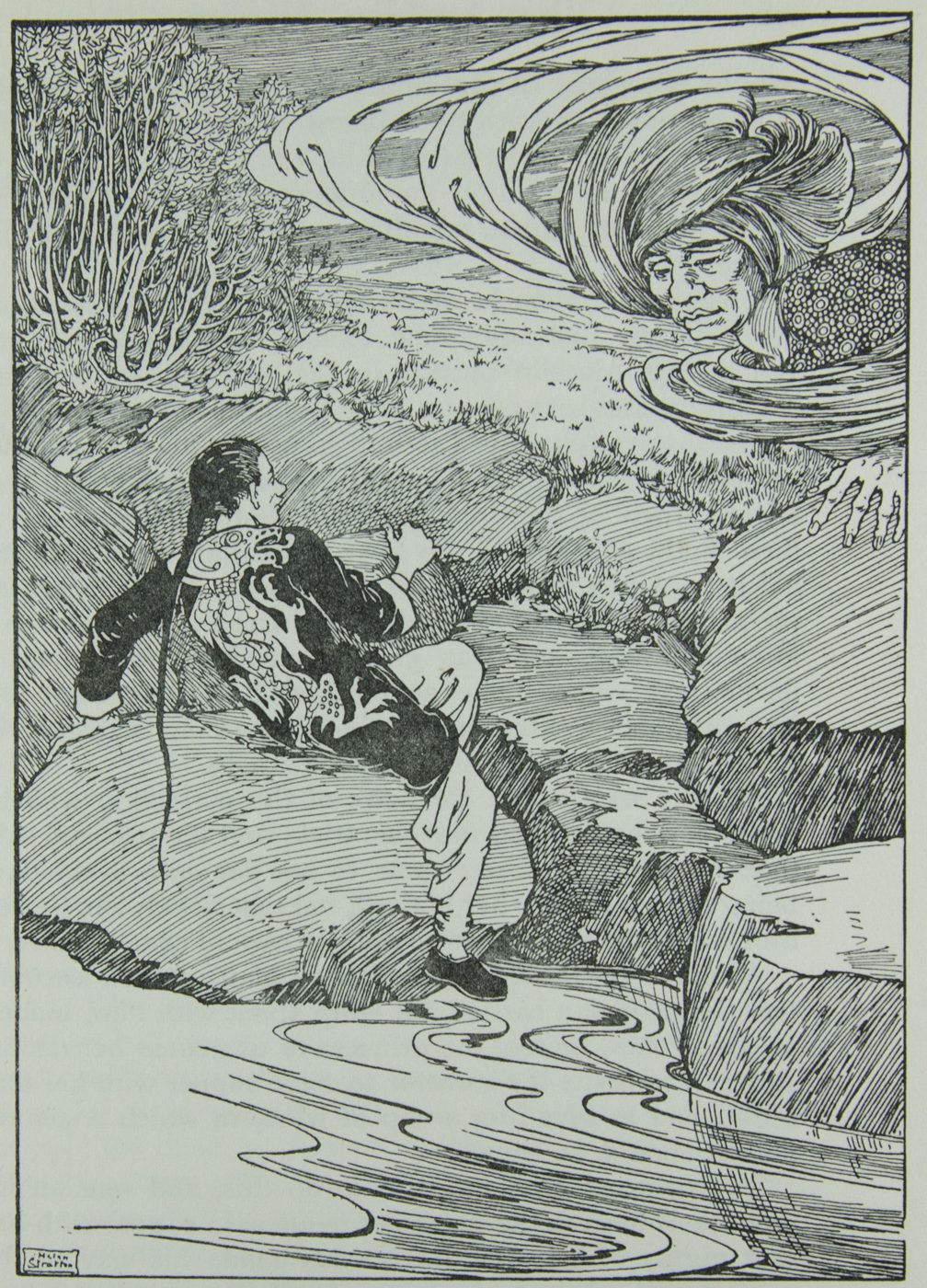
Paulo Lemos Horta has argued since 2017 that the tale draws on the life of its first teller, Hanna Diyab. Like Aladdin, Diyab was a poor young man from a merchant city whose fortunes turned. Like Aladdin, he followed a mysterious older man, the French collector Paul Lucas, who promised him a place in the world. And the palace and princesses of the tale recall what Diyab saw at Versailles months before he told the story to Antoine Galland in 1709.
“Both young men are shaped by an absent father (dead in the case of Aladdin and presumed dead in the case of Diyāb) and a melancholic mother.”
Afterword to Diyab’s Book of Travels (2021), p. 335
“In that memoir, Diyab describes his own hard-knocks upbringing and the way he marveled at the extravagance of Versailles. The descriptions he uses were very similar to the descriptions of the lavish palace that ended up in Galland’s version of the Aladdin story. With that in mind, Horta believes that “Aladdin might be the young Arab Maronite from Aleppo, marveling at the jewels and riches of Versailles.” This idea is hugely significant in the history of the story.”
More in Horta’s words (2)
“In both stories, the youth falls under the sway of a mysterious father figure, a man in possession of magical objects or abilities. And Lucas, I would add, was taken in his travels in the Levant for a magician.”
Afterword to Diyab’s Book of Travels (2021), p. 335
“Diyab himself came from a modest background, and hungered for the class ascension that occurred in story of Aladdin … He wanted to have a market stall, and in the Aladdin story, the magician, masquerading as Aladdin’s uncle, promises to set him up as a cloth merchant with a shop of his own so he might live as a gentleman.”
quoted in Time, 23 May 2019
More from critics and scholars (4)
“[As Horta shows,] “Aladdin” is not a Syrian writing about a fictitious China, but a Syrian traveller to Europe filtering his visions of Europe through traditional Arabic storytelling. He was a boy made good, after all.”
“What followed then, as Horta writes, is a fascinating exercise in story creation, imaginative retelling and literary collaboration. This was born out of Diyab’s own walkabouts in Paris, his visits to Paris’ numerous sights including Louis XIV’s Palace of Versailles and of Diyab’s earlier journey with Lucas, that included an encounter with French pirates in the Mediterranean.”
“Paulo wrote a whole book about this—Marvellous Thieves: Secret Authors of the Arabian Nights—and he devotes a chapter to the idea that, rather than see Aladdin as Galland’s projected vision of the East, it’s more plausible to think of it as Diyab’s vision of France.”
“As Paulo Lemos Horta describes in his introduction to Yasmine Seale’s 2018 re-translation of Aladdin, Galland didn’t invent the story.”
Academic priority
- January 2017Horta, Marvellous Thieves (Harvard University Press)
- 2021Horta, Afterword to Diyab’s Book of Travels (2021)
Global mainstream impact
- 1 January 2017Stuart Kelly, Scotland on Sunday
- 18 February 2017Anu Kumar, The Wire
- 19 October 2018Yasmine Seale, translator of Aladdin, Publishers Weekly
- 23 May 2019Horta quoted in Time
- 23 May 2019Olivia B. Waxman, Time
- 27 May 2019ArabLit, “Forthcoming: Translation of Memoir by ‘Aladdin’-teller Hanna Diyab”