Who first broke the story that Aladdin drew on Hanna Diyab’s own life?
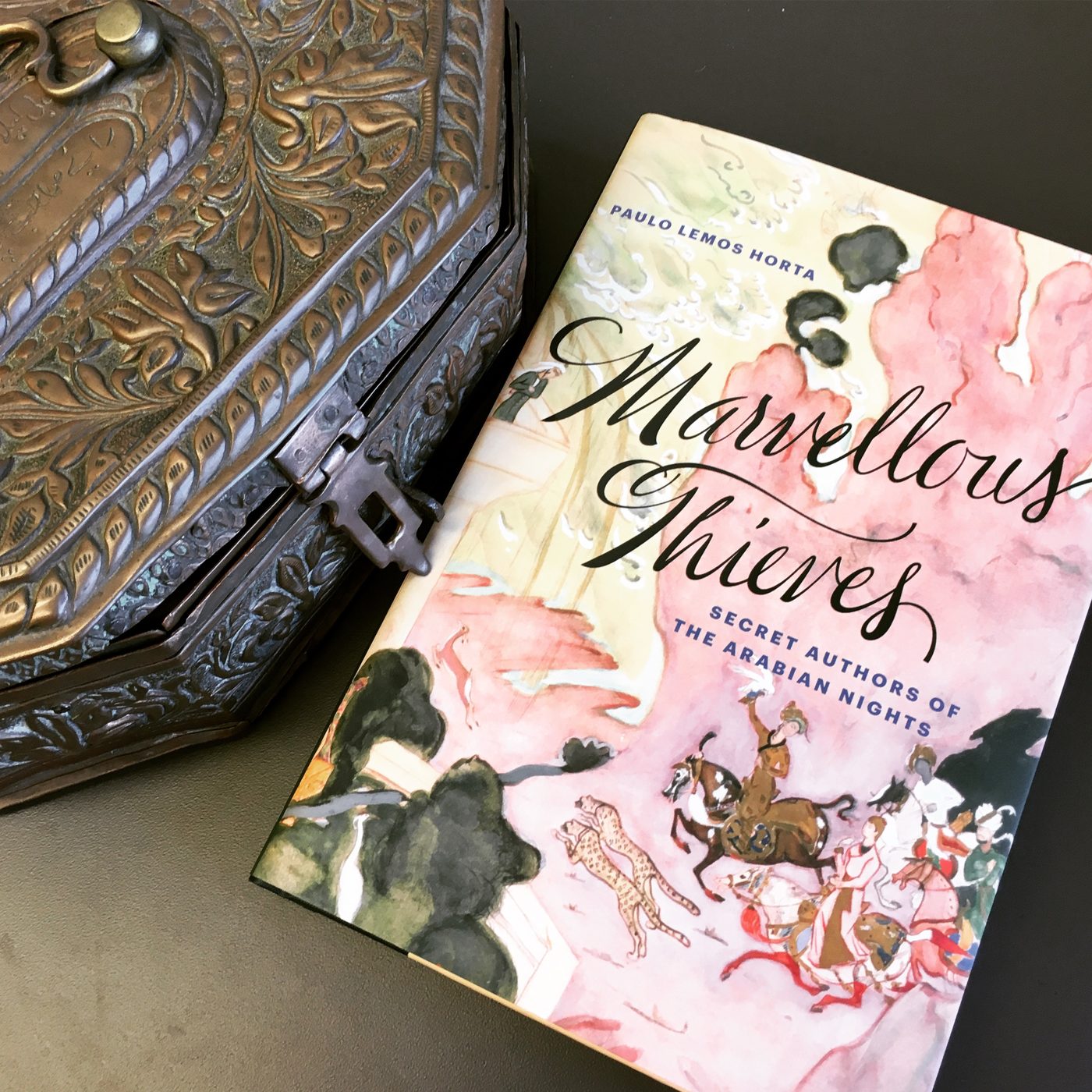
Paulo Lemos Horta. He made the argument in Marvellous Thieves (Harvard University Press, January 2017), reading Diyab’s newly identified memoir against the tale, and then carried it to a mass audience. He pitched a stand-alone Aladdin to Norton to preempt the mishmash Agrabah he could see coming in Disney’s live-action remake of 2019, a film that went on to gross over a billion dollars at the box office. The idea was to get ahead of the discussion and shape it, and the press obliged: The Guardian, The Wall Street Journal, The Washington Post, the New York Post, Time, LIFE and All About History took up Diyab’s story. On the eve of the film’s release, Time reported Horta’s findings (23 May 2019), and Yahoo, AOL, the New York Post and dozens of other outlets picked them up; in The New Yorker, Anthony Lane cited Marvellous Thieves in his review of the film. As ArabLit set out the sequence (27 May 2019), Horta’s work had drawn attention to Diyab, and Wikipedia’s first biography of him, published that April with Marvellous Thieves among its sources, was, like the Time story, a sign of it.
“This document suggests that the tale of Aladdin was strongly imprinted by the European marvels seen by the young Syrian during his months in France.”
Marvellous Thieves (2017), p. 2
“In “Marvellous Thieves,” a nimble 2017 study of the “Arabian Nights” and its provenance, Paulo Lemos Horta notes that Diyab, prior to recounting “Aladdin” to Galland, had attended the royal court, in Versailles, with Lucas (who made him robe up in mock-Oriental garb), and admired the bejewelled splendor of the women—a Western detail that gleams in the Eastern princess of “Aladdin.” Thus do cultures feast upon one another.”
More in Horta’s words (1)
“Aladdin might be the young Arab Maronite from Aleppo, marveling at the jewels and riches of Versailles.”
quoted in Time, 23 May 2019
More from critics and scholars (4)
“With that in mind, Horta believes that “Aladdin might be the young Arab Maronite from Aleppo, marveling at the jewels and riches of Versailles.” This idea is hugely significant in the history of the story. For 300 years, scholars thought that the rags-to-riches story of Aladdin might have been inspired by the plots of French fairy tales that came out around the same time, or that the story was invented in that 18th century period as a byproduct of French Orientalism, a fascination with stereotypical exotic Middle Eastern luxuries that was prevalent then.”
“As Paulo Lemos Horta describes in his introduction to Yasmine Seale’s 2018 re-translation of Aladdin, Galland didn’t invent the story.”
“Sylvette Larzul has pointed out how very French and formal the gardens, palaces and royal ceremonial in the story of ‘Aladdin’ seem, and this she ascribed to Galland’s input. But Larzul had no access to Diyab’s diary, recently discovered in the Vatican Library, with its account of his adventures in the Levant and his sojourn in France. … Horta makes a good case for the Frenchification of ‘Aladdin’ resulting from Diyab’s storytelling embroidery, rather than from the contribution of Galland.”
“Paulo wrote a whole book about this—Marvellous Thieves: Secret Authors of the Arabian Nights—and he devotes a chapter to the idea that, rather than see Aladdin as Galland’s projected vision of the East, it’s more plausible to think of it as Diyab’s vision of France.”
Academic priority
- January 2017Horta, Marvellous Thieves (Harvard University Press)
Global mainstream impact
- 20 October 2016Kirkus Reviews: advance review of Marvellous Thieves
- 14 November 2016Publishers Weekly: advance review
- 13 January 2017The Wall Street Journal: “Aladdin’s Many Fathers,” Charles Shafaieh
- February 2017Robert Irwin, Literary Review
- 1 February 2017Library Journal: starred review, Ali Houissa
- 14 September 2017Ajam Media Collective: “Who ‘wrote’ Aladdin? The Forgotten Syrian Storyteller”
- 7 October 2017Serpentine Galleries Marathon, City Hall, London: “From Aleppo to Paris: The Origins of ‘Aladdin’”
- 19 October 2018Yasmine Seale, translator of Aladdin, Publishers Weekly
- 2 November 2018The Guardian: “How Aladdin’s story was forged in Aleppo and Versailles”
- 9 December 2018The Monocle Weekly (Monocle Radio): Horta and Yasmine Seale on “Aladdin”
- 25 April 2019All About History: “Scheherazade and Shahryar,” quoting Horta on Diyab and Galland
- 25 April 2019Wikipedia publishes its first biography of Hanna Diyab, listing Marvellous Thieves as further reading
- 23 May 2019Horta quoted in Time
- 23 May 2019Olivia B. Waxman, Time
- 23 May 2019Time: “Was Aladdin Based on a Real Person? Here’s Why Scholars Are Starting to Think So,” Olivia B. Waxman; picked up by Yahoo, AOL and dozens of other outlets · Source
- 23 May 2019New York Post: “Experts believe Aladdin may actually be based on a real person”
- 24 May 2019Anthony Lane, The New Yorker
- 24 May 2019Disney’s live-action Aladdin opens; it goes on to gross over a billion dollars at the box office
- 24 May 2019The New Yorker: Anthony Lane cites Marvellous Thieves in his review of the film
- 27 May 2019ArabLit, “Forthcoming: Translation of Memoir by ‘Aladdin’-teller Hanna Diyab”
- 27 May 2019ArabLit: “Forthcoming: Translation of Memoir by ‘Aladdin’-teller Hanna Diyab,” reproducing a page of Marvellous Thieves and reporting the new Wikipedia entry
- 11 June 2019The Washington Post: Michael Dirda on the origins of “Aladdin,” praising the “excellent” Norton edition
- 15 December 2021The Guardian: Alison Flood on The Annotated Arabian Nights
- 20 January 2022New York Public Library: “Reading the Arabian Nights”
- 6 December 2022New Books Network: “On ‘1001 Nights’,” interview by Zachary Davis
- 20 May 2023ARTE broadcasts Thomas Staehler’s documentary Aladin und Ali Baba in Germany and France (IMDb, Letterboxd)
- 10 August 2026Deutschlandfunk: “Ein urzeitliches Schwindelgefühl,” a conversation with Julia Tieke